
Table of Contents
- What Is the Monocheek Effect and Why It Happens
- Shapewear Sizing and Fit: The Foundation
- Shapewear That Lifts and Separates: Choose Designs That Work
- Prevent Shapewear From Rolling Down
- Targeted Exercises for Muscle Balance
- Posture, Alignment, and Daily Habits
- Assessing Progress and Setting Realistic Expectations
- Frequently Asked Questions
Last Updated: October 21, 2026
What Is the Monocheek Effect and Why It Happens
The monocheek effect is an uneven appearance where one cheek looks fuller, lifted, or more defined than the other, on your face or body, and learning how to avoid monocheek effect is key to achieving balanced symmetry. It's often caused by muscle imbalance, posture habits, or how shapewear fits. Perfect symmetry is rare; unevenness becomes noticeable when the difference is dramatic or habits make it worse over time.
Understanding Facial and Body Asymmetry
One side of your face and body is often slightly larger, stronger, or more developed than the other. That's normal. The problem arises when habits amplify these differences until they become visible.
Ill-fitting shapewear can contribute to asymmetry. Bunching on one side, rolling down unevenly, or compressing one area more than another creates temporary bulges and uneven lines, and repeated wear can reinforce muscle imbalances because your body adapts to how the garment supports each side.
At Syntura Body Studio, our shapewear is designed to smooth and lift, helping to prevent the bunching and rolling that can create an awkward monocheek look.
Common Causes of Uneven Cheeks and Muscle Imbalance
Several factors contribute to facial and body asymmetry:
- Chewing habits, Most people chew primarily on one side of their mouth. This strengthens the muscles on that side, creating a stronger, more defined cheek over time.
- Sleep position, Sleeping on the same side every night can compress facial tissues and weaken muscles on that side.
- Posture, Leaning to one side, holding tension in one shoulder, or favoring one leg while standing shifts how your body develops.
Shapewear Sizing and Fit: The Foundation
Proper sizing is the first step to avoiding the monocheek effect. A correctly fitted garment sits evenly on both sides without bunching, rolling, or bulging on one side while lying flat on the other.
Measuring for the Right Size
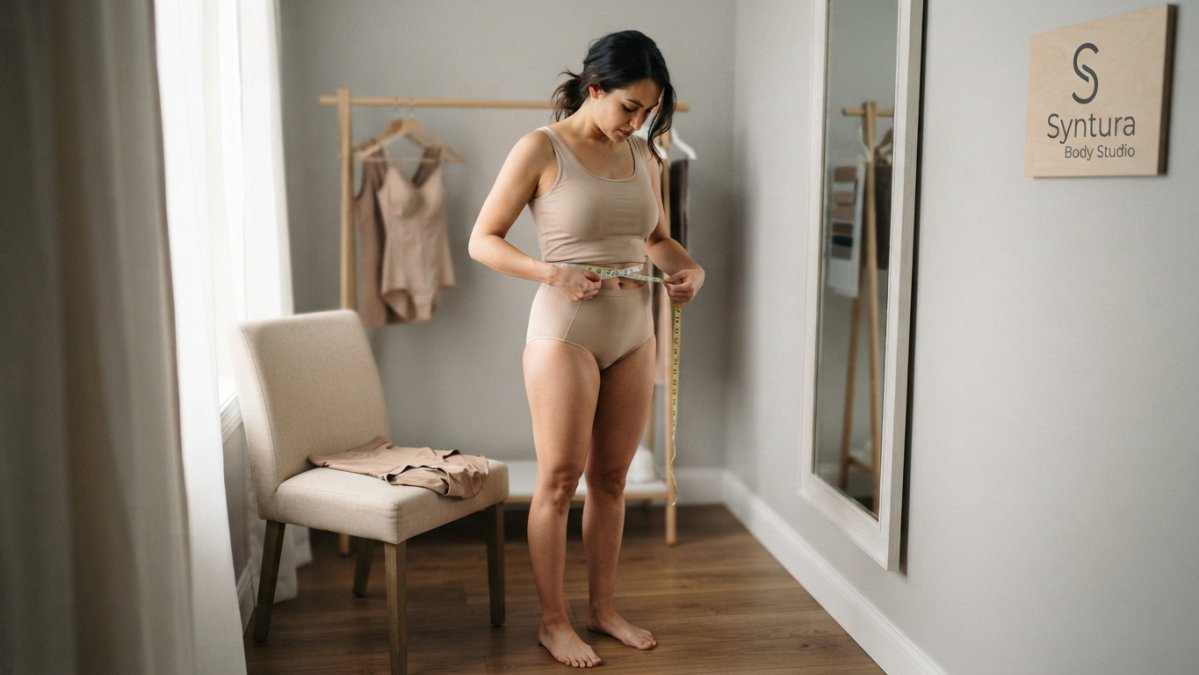
Getting your measurements right prevents most fit problems. Measure in the morning, wearing minimal clothing:
- Bust, Measure around the fullest part of your chest, keeping the tape parallel to the ground.
- Waist, Measure at your natural waist (the narrowest part), not your belly button.
- Hips, Measure around the fullest part of your hips and glutes, about 7-8 inches below your waist.
- Thigh, If choosing compression shorts or leggings, measure around the fullest part of your thigh.
- Inseam, For full-length options, measure from your inner thigh to your ankle while standing.
Compare these numbers to the size chart for the specific garment. Don't rely on your usual clothing size; shapewear sizing is different, and a size that fits your regular clothes may be too loose or too tight.
How Proper Fit Prevents Bunching and Bulges
A correctly sized garment hugs your body evenly without gaps or excess fabric, preventing the problems that create asymmetry:
- No bunching, Fabric lies smooth against your skin on both sides.
- No rolling, The waistband and leg openings stay in place without sliding down or riding up.
- Even compression, Both sides of your body receive the same level of support.
Bunching on one side usually means the garment is too large there or doesn't match your body's shape; poor fabric quality can also cause it.
Shapewear That Lifts and Separates: Choose Designs That Work
The best shapewear lifts and separates without flattening or creating weird bulges, working with your body's natural shape.
Targeted Support Features to Look For
When choosing a garment, look for these specific design elements:
- Structured panels, Reinforced sections provide targeted lift and support where you need it most.
- Graduated compression, Firmer compression in key areas (waist, hips, glutes) with lighter compression elsewhere prevents bunching and creates a natural silhouette.
- Breathable fabrics, Moisture-wicking materials prevent sweat buildup, which can cause fabric to shift and bunch.
Styles That Enhance Without Flattening
Look for designs that enhance your natural curves instead of flattening them:
- Lift the glutes, A lifted rear creates a balanced silhouette and prevents that sagging appearance on one side.
- Define the waist, Targeted waist compression creates shape without looking unnatural.
- Support the thighs, Smooth thighs on both sides help you avoid monocheek effect from extending down your legs.
Syntura Body Studio's collection smooths and lifts, aiming for a balanced and polished look.
Prevent Shapewear From Rolling Down
Rolling is one of the most common shapewear complaints. When a garment rolls down, it bunches on one side and creates exactly the asymmetry we're trying to avoid.
Secure Fit Techniques and Placement
Proper placement starts the moment you put on your shapewear:
- Step into the garment carefully, Don't yank it up. Smooth it up gradually, adjusting as you go.
- Align the seams, Center seams should be centered on your body, not twisted to one side.
- Smooth out wrinkles, Smooth the fabric against your skin on both sides to eliminate folds.
- Adjust the waistband, It should sit at your natural waist; a waistband that sits too low rolls down more easily.
- Check leg openings, They should sit at the same height on both legs. If one is higher, the garment is twisted.
- Secure with undergarments, Wear fitted underwear or a slip over your shapewear to hold it in place and reduce friction.
A common mistake is sizing up for comfort: oversized shapewear rolls down more easily and bunches more noticeably.
Fabric and Grip Considerations
The material affects how well your shapewear stays in place:
- Nylon-spandex blends, These provide good grip and flexibility. They're less likely to roll than pure polyester.
- Silicone-lined waistbands, Silicone grips your skin and prevents rolling at the waist. This is one of the most effective anti-roll features.
- Textured inner surfaces, A slightly textured fabric grips your skin better than a smooth surface.
Lower-quality shapewear uses cheap fabrics that don't grip well and roll constantly. Better-quality pieces prevent the asymmetrical look that comes with rolling.
Targeted Exercises for Muscle Balance
Exercise is one of the most effective ways to correct muscle imbalance; targeted work on your weaker side brings both sides into alignment.
Unilateral Work: Strengthening One Side at a Time
Unilateral exercises work one side at a time, which is key to correcting asymmetry. With bilateral exercises, your stronger side compensates, making the weaker side even weaker.
Single-leg glute exercises:
- Single-leg glute bridges, Lie on your back with one knee bent and one leg extended. Push through the bent leg to lift your hips. Do 12-15 repetitions per side, focusing on the weaker side.
- Single-leg deadlifts, Stand on one leg and hinge forward at the hip while extending the other leg behind you for balance. Perform 10-12 repetitions per side.
- Bulgarian split squats, Place one foot behind you on a bench or chair. Lower into a lunge on the front leg. Do 12-15 repetitions per leg, giving extra attention to your weaker side.
- Donkey kicks, On hands and knees, lift one leg behind you in a controlled movement. Perform 15-20 repetitions per side.
- Clamshells, Lie on your side with knees bent. Open the top knee while keeping your feet together. Do 20-25 repetitions per side.
Start with your weaker side and do the full set before switching. This ensures your weaker side gets your best effort when you're freshest.
Controlled Movement and Proper Form
How you perform an exercise matters more than repetition count. Sloppy form reinforces bad movement patterns and worsens asymmetry.
Keys to proper form:
- Move slowly, Take 2-3 seconds to lower and 1-2 seconds to lift. Slow, controlled movement activates muscles more effectively.
- Feel the working muscle, You should feel the exercise in the target muscle (glute, hip, thigh), not in your lower back or knees.
- Keep your core engaged, A tight core stabilizes your body and prevents compensation.
Start with 2-3 sets of 12-15 repetitions per side, 3-4 times per week, adding bands or light weights as you get stronger. The goal is consistency and quality, not intensity.
Posture, Alignment, and Daily Habits
How you carry yourself throughout the day directly affects muscle balance and facial symmetry. Poor posture reinforces asymmetry. Good posture prevents it.
How Posture Affects Facial and Body Symmetry
Posture isn't just about standing up straight; it's about distributing weight evenly and keeping your body aligned. Slouching, leaning to one side, or favoring one leg creates muscle imbalances that become visible over time.
Common posture problems that create asymmetry:
- Forward head posture, Leaning your head forward stretches neck muscles on one side and compresses them on the other.
- Uneven shoulder height, One shoulder higher than the other shifts weight distribution and creates facial asymmetry.
- Hip drop, Favoring one leg while standing shifts your hips and pelvis, creating imbalance in your glutes and lower body.
Correcting posture takes time and awareness. Set reminders to check your alignment: Are your shoulders level? Is your weight even on both feet? Is your head centered over your shoulders?
Chewing Habits and Muscle Development
Most people chew primarily on one side of their mouth, strengthening the masseter muscle on that side and creating a more defined cheek over time.
To balance your chewing:
- Consciously chew on your weaker side, Make a deliberate effort to chew on the side that feels less developed.
- Chew gum on your weaker side, Gum provides extended chewing time, which helps develop that side more.
- Chew slowly, Slower chewing engages the muscles more effectively than rapid chewing.
This habit takes practice. Set a phone reminder or a visual cue, like a sticker on your weaker side, to remind yourself to chew on that side.
Assessing Progress and Setting Realistic Expectations
Change takes time. Muscle development and facial symmetry improvements happen gradually. Knowing what to expect helps you stay motivated.
When to Expect Visible Changes
Different aspects of symmetry improve on different timelines:
- Posture improvements, You'll notice better posture within 1-2 weeks of consistent practice. Visible changes in how you carry yourself take 4-6 weeks.
- Muscle development, Noticeable muscle growth typically appears after 6-8 weeks of consistent targeted exercise.
- Facial symmetry, Changes in cheek definition and facial balance take 8-12 weeks or longer, depending on how pronounced the initial asymmetry was.
These timelines assume consistency. Sporadic exercise produces sporadic results. Commit to 3-4 weeks of consistent work before expecting visible changes.
Tracking Symmetry and Balance
Monitoring your progress keeps you accountable and helps you adjust:
- Take photos, Take front-facing and side-profile photos every 2-4 weeks. Compare them side-by-side to spot changes you might miss day-to-day.
- Measure key areas, Measure your waist, hips, and thighs every 2-4 weeks. Write the numbers down to track progress.
- Assess how clothes fit, Notice if your shapewear sits more evenly or if your regular clothes fit more symmetrically.
Progress isn't always linear. You might improve, plateau for a few weeks, then improve again. This is normal; stick with your routine even during plateaus.
Asymmetry is a common concern, but it's also one you can influence through consistent effort. The combination of proper shapewear fit, targeted exercises, postural awareness, and daily habit changes creates real, lasting results.
Frequently Asked Questions
What causes the monocheek effect, and is it normal?
The monocheek effect occurs when one cheek or buttock appears noticeably larger, rounder, or more lifted than the other due to muscle imbalance, uneven fat distribution, or asymmetrical muscle development. Mild facial asymmetry is completely normal, most people have some degree of unevenness. However, pronounced asymmetry can result from repetitive habits like favoring one side during chewing, unilateral exercises without balancing work, or wearing ill-fitting shapewear that bunches unevenly. Understanding the cause helps you address it effectively.
Can the wrong shapewear size cause a monocheek effect?
Yes. Shapewear that is too small, too large, or poorly designed can create bunching, bulging, or uneven compression on one side. When shapewear rolls, shifts, or doesn't distribute support evenly across both sides, it creates the appearance of asymmetry. Proper shapewear sizing and fit is foundational to avoiding this. Ensure you measure accurately, choose styles with targeted lift and separation, and select fabrics with reliable grip to prevent rolling.
How can I prevent shapewear from rolling down and creating bulges?
Secure fit starts with correct sizing and placement. Wear shapewear at the natural waistline, ensure the leg openings sit snugly without cutting off circulation, and choose styles with reinforced waistbands and high-grip fabrics. Compression shorts or lined shorts with synthetic materials offer better friction control than smooth fabrics. Avoid wearing shapewear too loose, as this causes migration throughout the day. If rolling persists, try a style with a higher waistband, wider leg opening, or additional side panels for stability. Proper fit prevents the bunching that creates an uneven appearance.
What exercises help correct muscle imbalance and asymmetry?
Unilateral exercises (working one side at a time) are most effective for correcting imbalance. Single-leg deadlifts, one-sided glute bridges, and controlled hip thrusts with per-side repetitions help strengthen the weaker side without overworking the already-developed side. Perform extra repetitions on your weaker side, maintain controlled movement throughout, and ensure proper form to engage the correct muscles. Combine unilateral work with balanced exercises to develop overall symmetry. Consistency matters, visible changes in muscle balance typically take 6-8 weeks of regular training.