
Table of Contents
- Understanding Breathability in Shapewear
- How to Measure for Shapewear Correctly
- Fabric Choices That Support Airflow
- Compression Levels and Comfort Balance
- Best Shapewear for Under Dresses
- Shapewear for Hot Weather: Staying Cool Without Sacrifice
- Using a Shapewear Size Guide to Find Your Fit
- Testing Breathability Before You Buy
- Frequently Asked Questions
Last Updated: October 11, 2026
Understanding Breathability in Shapewear
Breathability in shapewear refers to how well a garment allows air and moisture to move through its fabric while you wear it. This matters because shapewear sits directly against your skin for hours at a time. When a garment traps heat and sweat, you feel uncomfortable, overheated, and confined. The best breathable shapewear balances smoothing power with airflow, so you stay cool without sacrificing the shaping effect you're paying for.
Breathability determines whether you'll wear shapewear all day or remove it after a few hours. A garment that breathes well keeps you confident and comfortable through work, events, and daily life.
Breathable shapewear depends on fabric choice, construction method, and compression level. Lightweight microfiber with moisture-wicking properties feels dramatically different from dense nylon at the same compression strength.

How to Measure for Shapewear Correctly
Proper measurement eliminates most fit problems. Taking accurate measurements takes five minutes and prevents garments that dig in or feel suffocating.
Measure your waist and hip at their widest points using a soft measuring tape. Compare these measurements directly to the supplier's size chart before ordering. Never size down hoping for extra compression.
Prioritize comfort first. A snug fit that allows comfortable movement is always better than a tight fit that leaves marks or restricts breathing.

| Measurement | How to Measure | What to Compare |
|---|---|---|
| Waist | Around narrowest part | Size chart waist range |
| Hip | Around fullest part | Size chart hip range |
| Thigh | Around mid-thigh | Garment coverage length |
| Torso | Shoulder to hip | Bodysuit vs. brief style |
Fabric Choices That Support Airflow
Fabric choice determines breathability. Different materials trap heat, allow moisture to escape, or balance support with ventilation.
Comparing Fabrics for Breathability
Not all synthetic fabrics perform equally when it comes to airflow and moisture management. Here's how the most common shapewear materials compare across the factors that matter most:
| Fabric Type | Airflow | Moisture-Wicking | Weight | Stretch Recovery | Best For |
|---|---|---|---|---|---|
| Microfiber | Excellent | Excellent | Lightweight | Good | Hot weather, all-day wear, sensitive skin |
| High-Stretch Nylon (15-20% spandex) | Very Good | Very Good | Lightweight | Excellent | Most occasions, durable wear, varied climates |
| Polyester Blends | Moderate | Moderate | Medium to Heavy | Fair | Budget options, firm compression needs |
| Mesh-Paneled Nylon | Excellent | Excellent | Very Lightweight | Good | Maximum ventilation, athletic wear, summer |
| Dense Polyester | Poor | Poor | Heavy | Fair | Maximum compression, short-term wear only |
Airflow refers to how easily air circulates through the fabric. Microfiber and mesh-paneled constructions excel here; dense polyester restricts airflow significantly. Moisture-wicking pulls sweat away so it evaporates rather than pooling, microfiber and high-stretch nylon excel at this. Weight matters: lightweight fabrics feel cooler and dry faster. Stretch recovery is how quickly fabric bounces back after movement; high-stretch nylon excels because spandex provides elasticity.
Nylon and Spandex Blends
High-stretch nylon (typically 15-20% spandex content) allows movement while maintaining smoothing effect. Nylon blends work well for most body types and occasions, providing noticeable smoothing without heat retention of heavier fabrics.
Microfiber Construction
Microfiber is woven from extremely fine threads, creating a smooth surface that feels soft while allowing superior air circulation. It excels at moisture-wicking and is naturally hypoallergenic, making it ideal for warm weather, physical activity, or sensitive skin.
Mesh-Paneled Construction
Mesh panels at the sides, back, or underarm areas maximize ventilation. Mesh-paneled designs are ideal if you prioritize breathability or wear shapewear during physical activity or in hot environments, though mesh may be visible under very thin fabrics.
Compression Levels and Comfort Balance
Shapewear compression comes in three levels: light (subtle smoothing for all-day wear), medium (noticeable smoothing for most occasions), and firm (maximum shaping for special events). Never choose firm compression if you're between sizes; size up instead.
Higher compression usually restricts airflow, making fabric choice critical at firm compression levels. Breathable microfiber at firm compression feels more comfortable than dense polyester.
Best Shapewear for Under Dresses
For most dresses, a bodysuit works better than shorts or briefs, eliminating gaps where fabric might bunch. Choose a thong cut for low-back dresses to prevent visible panty lines. Microfiber or high-stretch nylon creates a smooth, thin layer that doesn't add bulk; avoid dense polyester.
Shapewear for Hot Weather: Staying Cool Without Sacrifice
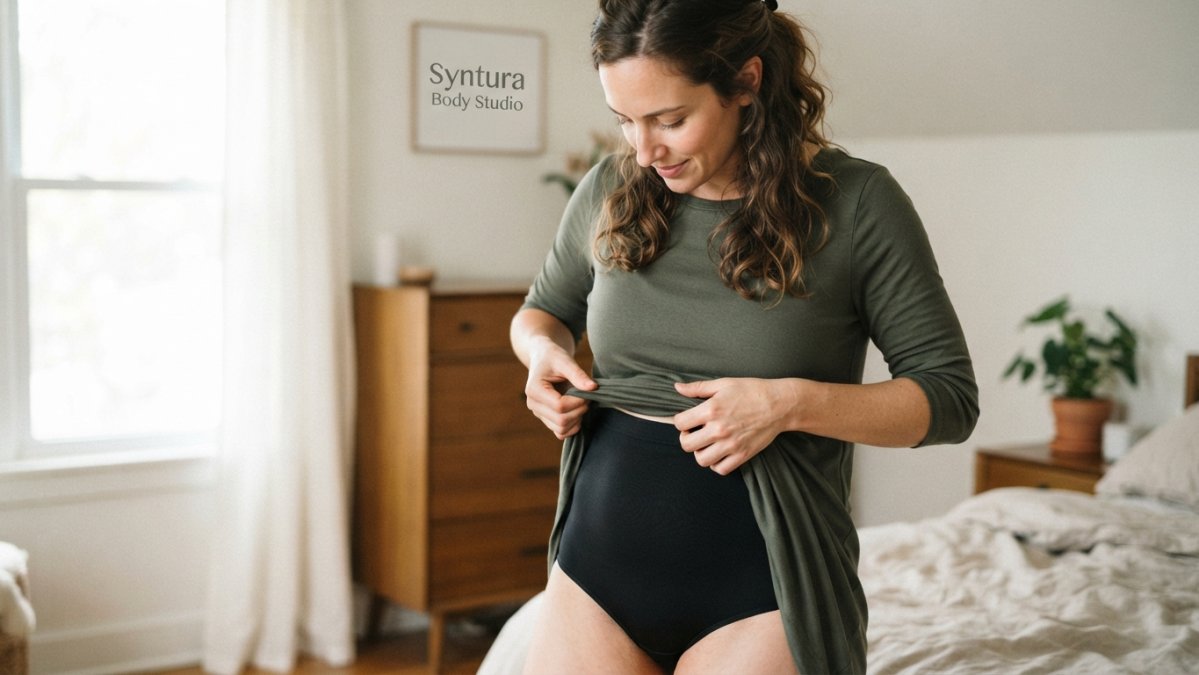
Choose lightweight, moisture-wicking breathable shapewear made from microfiber or high-stretch nylon for hot weather. Consider lighter compression levels and sleeveless or minimal-coverage styles. Check product descriptions for "ultralight," "lightweight," or "breathable" terms.
Using a Shapewear Size Guide to Find Your Fit
Compare your measurements to the specific size chart before ordering, each brand sizes differently. If you fall between two sizes, choose the larger one. Read the size guide notes carefully and follow the brand's specific guidance. Prioritize a snug fit that allows comfortable breathing and movement.
Testing Breathability Before You Buy
Assessing breathability before committing to a purchase prevents wasted money and frustration. Rather than relying on guesswork or vague product descriptions, you can use a structured evaluation method to identify whether a garment will feel comfortable during extended wear.
Women’s High-Waisted Mid-Thigh Shapewear Shorts →
The Breathability Checklist: What to Look For
Before you buy, review the product details and specifications using this checklist:
Fabric Content & Weight
- ✓ Check the fiber composition: Microfiber, high-stretch nylon (15%+ spandex), or mesh-paneled construction indicate good breathability.
- ✓ Avoid: Dense polyester, heavy blends, or fabrics listed as "compression fabric" without breathability claims.
- ✓ Look for weight descriptors: "Ultralight," "lightweight," or "breathable" in product titles or descriptions signal thinner construction.
- ✓ If weight in grams per square meter (gsm) is listed, prefer 150-200 gsm for breathable shapewear; above 250 gsm indicates heavier, less breathable fabric.
Construction Details
- ✓ Mesh panels: Look for side panels, underarm panels, or back panels labeled as "mesh" or "breathable mesh." These maximize airflow in high-heat areas.
- ✓ Seam placement: Flat seams or bonded seams are less likely to dig in or restrict movement than raised seams. Check product photos or descriptions for seam details.
- ✓ Lining: A thin, moisture-wicking lining (often microfiber or nylon) is better than a thick cotton or polyester lining that traps moisture.
- ✓ Gusset: A breathable gusset (the crotch panel) should be mentioned if the garment is designed for all-day comfort. Absence of this detail may indicate a standard, less breathable construction.
Compression Level & Breathability Trade-Off
- ✓ Light compression + breathable fabric = best for all-day wear and hot weather.
- ✓ Medium compression + breathable fabric = suitable for most occasions without overheating.
- ✓ Firm compression + breathable fabric (microfiber or mesh-paneled) = necessary if you need maximum smoothing; avoid firm compression in non-breathable fabrics.
- ✓ Never assume firm compression will feel comfortable; prioritize breathable materials at higher compression levels.
Product Descriptions & Claims
- ✓ Look for explicit breathability language: "Breathable," "moisture-wicking," "cooling," "ventilated," or "designed for all-day wear."
- ✓ Avoid vague claims: "Comfortable" or "soft" don't guarantee breathability.
- ✓ Check for activity-specific claims: "Workout shapewear," "hot weather shapewear," or "summer collection" indicates the garment was engineered for heat management.
Evaluating Customer Reviews for Real-World Breathability
Customer reviews reveal how breathable a garment actually feels in practice. When reading reviews, look for these specific comments:
Positive indicators:
- "Doesn't feel hot" or "stays cool all day"
- "Doesn't trap sweat" or "moisture-wicking works"
- "Can wear for 8+ hours comfortably"
- "Doesn't feel suffocating" or "easy to breathe in"
- "Lightweight" or "barely notice I'm wearing it"
- "No irritation" or "gentle on skin"
Red flags:
- "Feels hot" or "overheats quickly"
- "Traps sweat" or "gets clammy"
- "Can only wear for a few hours"
- "Feels restrictive" or "hard to breathe"
- "Heavy" or "bulky"
- "Causes chafing" or "irritates skin"
Pay special attention to reviews from people in climates similar to yours or who describe similar activity levels. A reviewer in a cool climate may not report overheating issues that someone in a hot, humid environment would experience.
Testing Fit and Breathability Upon Arrival
When your shapewear arrives, follow this protocol to assess breathability before committing:
Immediate assessment (first 5 minutes):
- Put on the garment and check the fit against your size chart measurements. It should feel snug but not restrictive.
- Take a few deep breaths. You should be able to breathe normally without the fabric pressing against your ribs or diaphragm.
- Move your arms, bend, and sit. The garment should move with you without digging in or riding up.
Extended wear test (30 minutes minimum):
- Wear the shapewear for at least 30 minutes during normal activity, sitting, standing, walking, light movement.
- Pay attention to how the fabric feels against your skin. Does it feel soft and breathable, or does it cling and trap heat?
- Notice whether you're sweating more than normal or if moisture is being wicked away. Light perspiration that dries quickly is normal; clammy, pooling sweat indicates poor breathability.
- Check for irritation, chafing, or numbness. These are signs the garment is too tight or the fabric is not breathable enough.
Decision point:
- If the garment feels uncomfortable after 30 minutes of normal wear, it's probably not the right choice. Shapewear should feel like a second skin, not a constraint.
- If it feels good during this trial, wear it for a full day (8+ hours) before deciding. Comfort during extended wear is the true test of breathability.
Return Policies and Risk-Free Trials
Before purchasing, confirm the return policy. A generous return window (30+ days) and hassle-free returns remove the financial risk of ordering the wrong garment. This allows you to try the shapewear in real-world conditions and return it if it doesn't meet your breathability and comfort needs.
Frequently Asked Questions
How do I figure out what size shapewear I need?
Measure your waist and hip at their widest points with a soft tape measure held snug but not tight. Write down both measurements and compare them to the shapewear size guide provided by the manufacturer. Most brands offer sizing charts that match measurements to XS-4XL ranges. Choose a comfortable fit rather than sizing down; overly tight shapewear restricts breathing and movement. Syntura Body Studio's High-Waisted Mid-Thigh Shapewear Shorts come in sizes XS-S through 4XL, so compare your measurements before ordering to ensure proper fit.
What fabrics make shapewear more breathable?
Nylon allows moisture to move away from skin while maintaining compression, while spandex provides flexibility and recovery without trapping heat. Syntura Body Studio's Colombian Lace-Trim Shapewear Bodysuit uses high-stretch nylon, which balances breathability with firm control.
How can you tell if shapewear fits properly?
Proper fit means the garment sits smoothly against your body without rolling, bunching, or creating visible bulges under your clothes. You should be able to breathe normally and move freely without restriction. Check that straps don't dig into shoulders and that the waistband sits comfortably without pinching. If you feel pressure on your ribs, difficulty breathing, or numbness after 30 minutes, the fit is too tight. Remove or adjust the garment immediately. Test the fit by sitting, bending, and walking to ensure comfort throughout your day.
How do you choose shapewear for hot weather?
Select lightweight, moisture-wicking fabrics in breathable nylon or spandex blends that allow air circulation. Choose lighter compression levels (light to medium) rather than firm control, as extra pressure traps heat. Opt for minimal coverage styles like shorts or vests instead of full-body pieces. Look for seamless construction that reduces bulk and friction.