
Table of Contents
- Why Shapewear Rolls Down (and How to Read the Sign)
- How to Choose the Right Shapewear Size
- Step-by-Step Fit Check for Your Body Shape and Garment Style
- Prevent Shapewear From Rolling Down While Sitting, Walking, and Dancing
- How to Stop Shapewear From Rolling Up Thighs
- Shapewear That Doesn't Roll Down: What to Look For
- Fashion Tape, Alterations, and When to Switch Styles
- Conclusion
- Frequently Asked Questions
Last Updated: October 4, 2026
Why Shapewear Rolls Down (and How to Read the Sign)
Shapewear rolls down when the garment's grip, size, and construction don't match the body it's holding.
If you've ever tugged at a waistband in a bathroom stall, you're not alone. A common frustration is that smoothing pieces shift, bunch, or slide the moment you sit down.
Rolling isn't random. It's a signal, and it usually points to one of three things: the wrong size, worn-out grip, or a garment built for a different body shape.
Rolling at the Waist Versus Rolling at the Thigh
Where the roll happens tells you what's wrong.
- Rolling at the waist: the top edge is too loose, the torso is long, or the fabric has lost its stretch.
- Rolling at the thigh: the leg opening is too tight, or the shorts are too short for your frame.
- Rolling at both ends: the garment is likely the wrong size overall.
Read the location first, then match it to a fix.
Fabric, Care, and Wear That Kill Grip Over Time
Silicone strips and grip bands wear out. Heat from dryers breaks down elastic. Body lotion and oils coat the grip surface and make it slick.
A common mistake is blaming the garment when the real culprit is the laundry cycle. Wash in cold water, skip the dryer, and let grip bands air-dry to keep them tacky.
How to Choose the Right Shapewear Size
Sizing is the single biggest factor in stopping roll-down, but most guides stop at "measure yourself." The real gap is knowing how to measure for your specific body shape and garment style, and what to do when you fall between sizes.
Start with a soft tape measure on bare skin, not over clothing. Take these four measurements:
- Natural waist: the narrowest point, usually about an inch above the belly button. Keep the tape snug but not digging in.
- High hip: about 3-4 inches below the waist, where a high-waisted garment's top edge will sit.
- Full hip: the fullest part of your seat, feet together.
Write these down. Then check the brand's size chart, not your usual dress size. A medium in one line can be a large in another because compression fabrics vary.
Fit Check by Body Shape and Garment Style
A two-minute mirror check before you commit to a size can prevent all-day rolling. Here's a step-by-step sequence tailored to common shapes and styles:
- Put the garment on first, before your outfit, on clean, dry skin. Lotions and oils reduce grip.
- Smooth upward, not downward, to seat the fabric against your body without stretching the top edge.
- Check the top edge: it should sit flat with no gap you can slide a finger under. If it gaps, the size is too big or the cut is wrong for your torso.
- Bend, sit, and twist in front of a mirror. Watch for the edge lifting or curling. If it rolls immediately, size down one step, but never two.
- Adjust straps or closures if anything pulls or digs. Straps that slip mean you need adjustable ones or a bodysuit.
- Add your outfit and recheck the silhouette. A garment that looks smooth under leggings may bunch under a slip dress.
Different body shapes need different checks:
- Long torso: look for high-waisted styles that sit above your natural waist. A standard brief will roll down because the rise is too short.
- Short torso: avoid extra-high waists that bunch under the ribs. A mid-rise short or bodysuit with adjustable straps works better.
- Curvy hips and thighs: choose shorts with a longer inseam (7-8 inches) so the leg hem reaches mid-thigh and has more surface to grip.
For reference, our Zippered Waist Trainer Corset uses a clear waist-based chart, from S at 25 to 28 inches up to 3XL at 43 to 46 inches. Matching your measurement to the chart beats guessing every time. If your waist measures 29 inches, for example, you'd fall between S and M on some charts, here you'd choose M for comfort or S for firmer support.

Step-by-Step Fit Check for Your Body Shape and Garment Style
A proper fit check takes two minutes and prevents all-day rolling. Do it in front of a mirror before you get dressed.
Here's the sequence we recommend:
- Put the garment on first, before your outfit, on clean, dry skin.
- Smooth upward, not downward, to seat the fabric against your body.
- Check the top edge sits flat, with no gap you can slide a finger under.
- Bend, sit, and twist to see if the edge lifts or curls.
- Adjust the straps or closure if anything pulls or gaps.
- Add your outfit and recheck the silhouette in the mirror.
Different body shapes need different checks. Long torsos often need a higher-waisted piece. Curvy hips may need shorts with a longer inseam. Petite frames do better with cropped styles that don't bunch.
Prevent Shapewear From Rolling Down While Sitting, Walking, and Dancing
Movement is where most roll-down shows up.
Sitting: sit on a firm chair and lean forward. If the waistband lifts, the top edge is too loose.
Walking: take twenty steps.
Colombian Shapewear Bodysuit with Lace Trim | Black XXL →
Dancing: twist and raise your arms. Straps that slip mean you need adjustable straps or a bodysuit instead of separates.
To prevent shapewear from rolling down during a long event, do a five-minute test run at home first.
How to Stop Shapewear From Rolling Up Thighs
Rolling up at the thigh is a different problem from rolling down, and it needs a different fix. The leg opening is usually the cause.
Try these fixes:
- Size up if the leg band digs into your skin.
- Choose a longer inseam so the short reaches mid-thigh.
- Look for silicone grip at the leg hem.
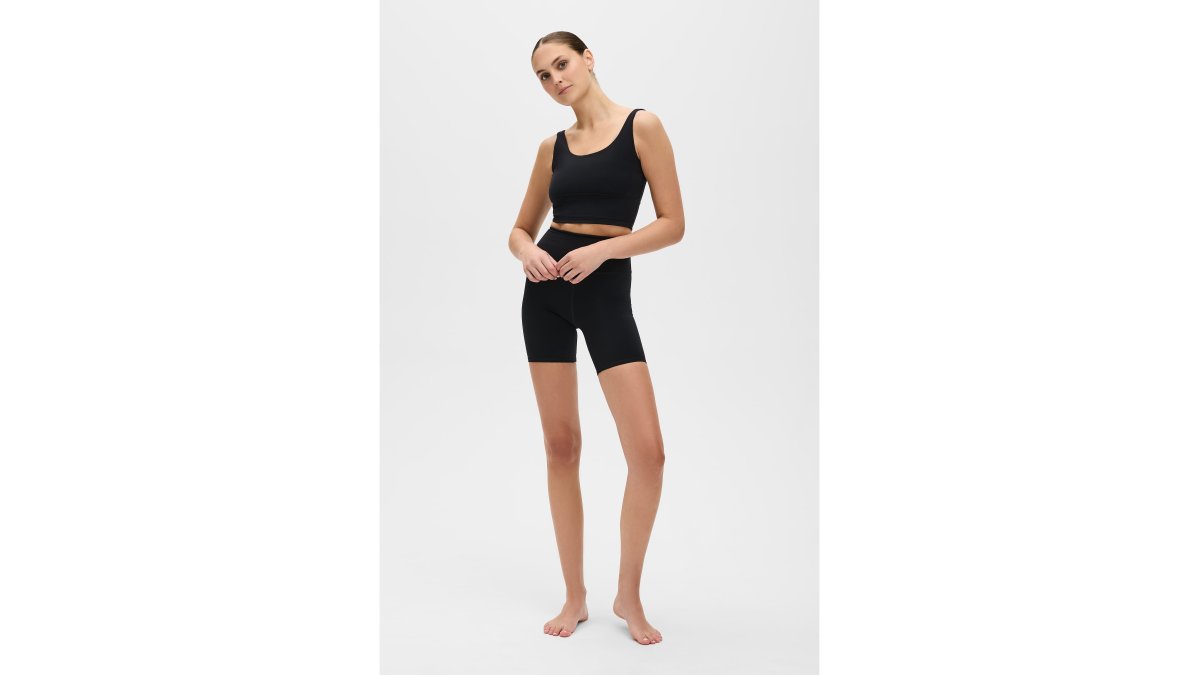
A common mistake is buying shaping shorts that are too short. The shorter the leg, the more likely it is to ride up. A 7.5-inch inseam, like our Lisse Compression Bike Short, gives more surface to grip and stays put better than a brief cut.
Shapewear That Doesn't Roll Down: What to Look For
The best shapewear that doesn't roll down shares a few build details. Look for these before you buy:
- Silicone strips along the top edge and leg hems
- Boning or a firm waistband for structure
- High-waisted cuts that sit above the natural waist
| Feature | What It Does | Best For |
|---|---|---|
| Silicone strip | Grips skin, stops sliding | Waist and thigh edges |
| Boning | Adds structure, holds shape | Waist trainers, corsets |
| High-waisted cut | Sits above the waistline | Long torsos, seated wear |
| Adjustable straps | Custom tension | Bodysuits, full-body pieces |
| Longer inseam | More grip surface | Thigh roll-up |
One-piece designs like a bodysuit often hold better than separate pieces, because there's no seam to shift. Our Colombian Shapewear Bodysuit with adjustable straps and a three-row hook closure is built to stay in place under a fitted dress.

Fashion Tape, Alterations, and When to Switch Styles
Fashion tape is a quick fix, not a solution. It can hold a hem or edge for a few hours, but it won't fix a sizing problem. The gap most guides miss is how to use tape safely and when to stop altering and switch styles entirely.
Safe Use of Fashion Tape
Fashion tape works best on clean, dry, lotion-free skin. Oils and moisturizers prevent adhesion and can cause the tape to slide, which may irritate skin.
- Test first: apply a small strip to your inner forearm and leave it for an hour. If you have sensitive skin, look for hypoallergenic or medical-grade tape.
- Apply to skin, not fabric: place tape on the garment edge, then press onto skin. For high-waisted shapewear, tape the top edge to your torso, not to your bra, which can shift.
- Remove slowly: peel back against the direction of hair growth. Never rip it off. Use warm water or oil to loosen if needed.
Alterations: When They Help and When They Don't
A tailor can take in a loose waistband or shorten straps, but alterations have limits. If you're altering a garment more than once, the size is wrong. Common alterations that work:
- Taking in the waistband: only if the garment is otherwise the right size. Taking in more than an inch can distort the fit and cause new rolling.
- Shortening straps: for bodysuits or camisoles that gap at the top. Use a tailor who understands stretch fabrics.
- Adding silicone strips: some tailors can sew in grip tape, but this is a temporary fix and may void returns.
Alterations that rarely work: shortening a long torso garment, adding boning to a soft piece, or trying to shrink a too-large garment.
When Persistent Discomfort Means the Garment Is Wrong
If shapewear digs into your ribs, makes it hard to breathe, or leaves deep marks, it's too tight. That's not a fit you should push through. Signs it's time to switch:
- Red marks that last more than an hour after removal
- Trouble taking a full breath or feeling short of breath (the NHS)
- Numbness or tingling in your legs or feet (the NHS)
Comfort and smoothing can coexist. If they don't, the garment is the problem, not you. Switch to a different style, like a bodysuit instead of separates, or a high-waisted short instead of a brief, or size up. If you've tried two sizes and two styles and still roll, the issue may be your body shape versus that brand's cut. That's normal; not every brand fits every body.
Conclusion
Rolling shapewear is frustrating, but it's almost always fixable. Check the size, test the fit in motion, and look for grip features like silicone strips and structured waistbands.
At Syntura Body Studio, we build pieces with all-day comfort in mind, from adjustable-strap bodysuits to firm-control waist trainers with breathable fabric.
Ready to stop tugging and start feeling supported? Continue shopping our collection and find the piece that stays put.
Frequently Asked Questions
Why does shapewear roll down at the waist?
A waistband rolls when the band is too loose, too tight, or sitting on a spot that flexes every time you bend. A small band on a long torso will slide into the crease above the hip, while a band that is too tight gets pushed down by your own movement. Look for a wide, high-waisted band with a silicone strip, and check that the top edge sits flat against skin rather than over a bra band or seam.
Can the wrong shapewear size cause it to roll down?
Yes, and it is the most common cause. Too large and the fabric has nothing to grip, so it slides and folds. Too small and the compression pushes the band down as you move. Measure your waist at its narrowest point and your hips at their fullest, then compare both against the size chart before ordering. If you sit between sizes, size up for daily wear and size down only for firm, short-wear compression.
How do you stop thigh shapewear from rolling up?
Choose shorts with a longer inseam, such as a 7.5-inch bike short, so the hem sits where your thigh is widest rather than at the crease. A silicone grip band or a light anti-chafe layer at the hem helps the fabric stay put. Pull the shorts up high on the waist first, then smooth the legs down so the fabric is not stretched tight across the thigh.
Is fashion tape safe for holding shapewear in place?
Fashion tape can hold a garment edge for a few hours, but it is a short-term fix, not a daily solution. Apply it to clean, dry, lotion-free skin, press for 30 seconds, and remove slowly. Never tape over broken skin or use it to force a garment that is clearly too small. If you need tape every time you wear a piece, the size or style is wrong and a different cut will serve you better.