
Table of Contents
- Understanding Postpartum Shapewear Size Guide 2026
- How to Measure for Postpartum Shapewear
- Postpartum Shapewear Size Chart and Sizing Options
- C-Section Shapewear: Fit and Incision Considerations
- Postpartum Belly Band vs Shapewear: Which Is Right for You?
- Sizing by Recovery Stage and Delivery Type
- Safety, Comfort, and When to Seek Guidance
- Frequently Asked Questions
Last Updated: October 19, 2026
Understanding Postpartum Shapewear Size Guide 2026
Finding the right postpartum shapewear size is one of the most overlooked decisions new mothers make. Your body has changed dramatically, your measurements are still shifting week to week, and sizing down to match your pre-pregnancy dimensions is a mistake almost everyone makes.

The postpartum shapewear size guide you need isn't just a chart. It's a framework for measuring accurately at each recovery stage and choosing a size that supports rather than restricts.
This guide covers measurement, reading size charts accurately, C-section considerations, and how your sizing needs change as your body transforms, so you'll know what size to order and why it's right for this moment in your recovery.
How to Measure for Postpartum Shapewear
Accurate measurement is the foundation of correct sizing. Most women guess or use pre-pregnancy measurements, both of which lead to poor fits. Postpartum measurement requires a different approach because you're measuring a body in transition, not a stable one.
Taking Accurate Waist and Hip Measurements
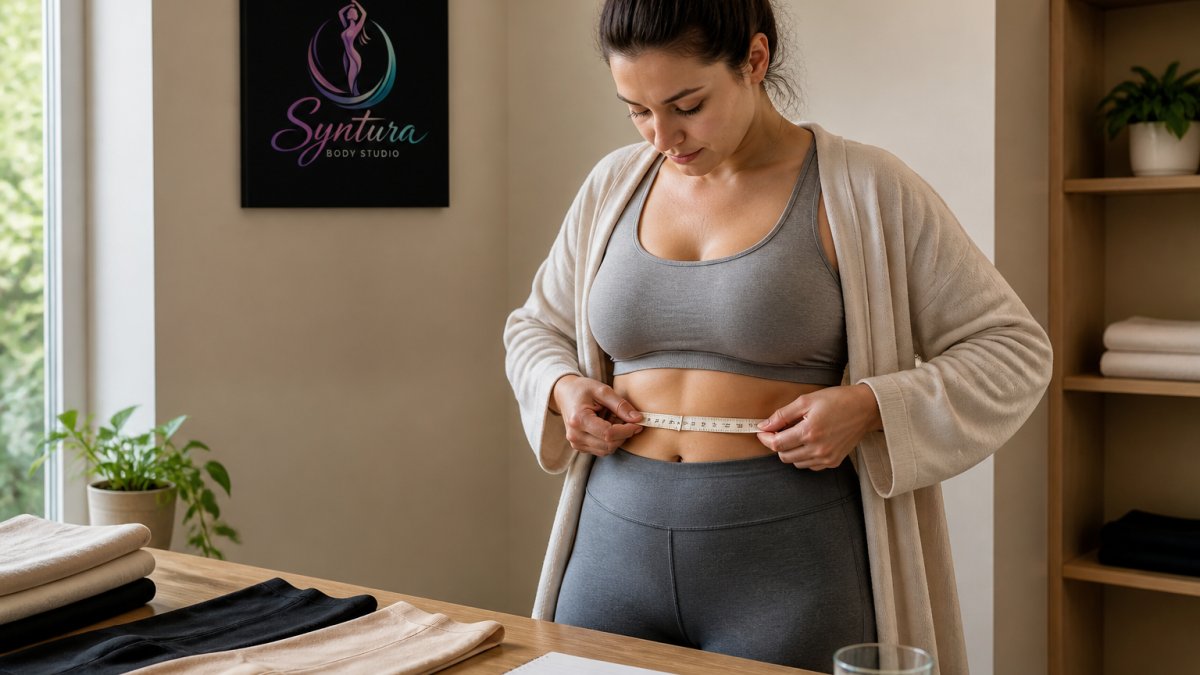
Measure your waist at the narrowest point around your midsection, typically just above your navel, using a soft measuring tape.
For hip measurement, measure around the fullest part of your hips and buttocks. This is usually about 8-10 inches below your waist. Again, keep the tape snug but not tight.
Write both measurements down immediately. If possible, take them three times across different days, since measurements can fluctuate by a half-inch or more with hydration, time of day, and eating. Use the average.
Accounting for Postpartum Body Changes
Your postpartum body is still carrying extra fluid, and your abdominal wall is still recovering. Between weeks 2 and 6 you'll lose significant water weight, and between weeks 6 and 12 your core stabilizes and hormones shift, so your measurements now may not reflect your measurements in four weeks.
In the early postpartum period, measure conservatively: if your waist falls between two sizes, choose the larger one. Early shapewear should support without compressing while you're still healing. By weeks 6-12, you can transition to a size with more control as your body stabilizes.
If you're measuring after 12 weeks postpartum, your measurements are likely more stable. At this point, measure accurately and choose based on where your measurements fall without the safety margin you'd use in early recovery.
Postpartum Shapewear Size Chart and Sizing Options
Reading a postpartum shapewear size chart correctly prevents the most common sizing mistakes. Charts aren't one-size-fits-all, and manufacturers use different standards, so the postpartum shapewear size guide you use should show waist and hip measurements for each size, not just generic S-M-L labels.
Reading Your Size Chart: XS to 4XL
Most postpartum shapewear size charts display measurements in this format: XS (waist 24-26", hip 34-36"), S (waist 26-28", hip 36-38"), M (waist 28-30", hip 38-40"), L (waist 30-32", hip 40-42"), XL (waist 32-34", hip 42-44"), 2XL (waist 34-36", hip 44-46"), 3XL (waist 36-38", hip 46-48"), 4XL (waist 38-40", hip 48-50").
Find where your waist measurement falls first, then cross-reference your hip measurement. If both fall within the same size, that's your size. If your waist and hip measurements suggest different sizes, prioritize the hip measurement, hip fit determines whether the garment stays in place, while waist compression can be adjusted slightly through wear and positioning.
| Size | Waist Range | Hip Range | Best For |
|---|---|---|---|
| XS | 24-26" | 34-36" | Petite frames, early postpartum (weeks 2-4) |
| S | 26-28" | 36-38" | Small-framed postpartum bodies |
| M | 28-30" | 38-40" | Average postpartum bodies |
| L | 30-32" | 40-42" | Larger postpartum bodies |
| XL | 32-34" | 42-44" | Extended postpartum support |
| 2XL | 34-36" | 44-46" | Plus-size postpartum bodies |
| 3XL+ | 36"+ | 46"+ | Extended sizing for comfort |
Choosing a Size When Measurements Fall Between Sizes
This is where most women struggle. Your waist is 29 inches, your hips are 41 inches. Size M covers waist 28-30" and hip 38-40". Size L covers waist 30-32" and hip 40-42". You're between sizes on both measurements.
In this scenario, choose M if you're in early recovery (weeks 2-6) and prioritize comfort, since a slightly snug fit now will become uncomfortable in two weeks as you lose fluid. Choose L if you're past week 12 with stabilized measurements, or if you're sensitive to compression around your ribs and abdomen.
A common mistake is sizing down between sizes for better shaping. You won't get it, you'll get bunching, rolling, and squeezing that makes you want to take the shapewear off.
C-Section Shapewear: Fit and Incision Considerations
C-section recovery has different shapewear requirements than vaginal delivery. Your incision typically runs horizontally across your lower abdomen, and direct pressure creates pain and can compromise healing.
C-section-specific shapewear is designed with a lower waistband that sits below the incision line, typically starting at or below your hip bones rather than at your natural waist.
When choosing C-section shapewear, verify the waistband sits below your incision. Most incisions are 4-6 inches long, positioned horizontally across the lower abdomen, and a waistband above this area creates discomfort.
Sizing for C-section shapewear follows the same measurement principles, but you may find you need to size up slightly compared to standard postpartum shapewear because the lower waistband placement means less overall compression.
Postpartum Belly Band vs Shapewear: Which Is Right for You?
A postpartum belly band and postpartum shapewear serve different purposes.
Shapewear, by contrast, is a fitted garment providing medium to firm compression across the entire abdominal area, often extending down the thighs or up the torso.
Choose a belly band if you're in the first 4 weeks postpartum, you're managing pain or discomfort, or you want to wear something under loose clothing without visible lines.
Women’s High-Waisted Mid-Thigh Shapewear Shorts →
Many postpartum women use both at different times, a belly band for comfort during early recovery and shapewear for confidence once they're ready to wear fitted clothes again. This isn't redundant; it's appropriate progression.
Sizing by Recovery Stage and Delivery Type
Your postpartum shapewear size needs change as your body changes. Understanding how to adjust your sizing across recovery stages prevents the frustration of buying shapewear that fits for one month and then doesn't fit the next.
Weeks 2-6 Postpartum: Early Recovery Sizing
In the first two weeks postpartum, most women aren't ready for shapewear while managing pain, bleeding, and basic recovery. By week 2, many are ready for gentle support, though full shapewear may still feel too restrictive.
If you're measuring for shapewear at week 2-3, measure conservatively and choose the larger of two sizes. Your body is still carrying significant fluid, and your measurements will drop noticeably by week 6. Sizing up now means the shapewear will still fit at week 6 rather than becoming loose and ineffective.
For C-section recovery specifically, wait until week 3-4 before introducing shapewear, and start with lighter compression. Your incision needs time to heal, and early compression can create discomfort or compromise healing.
Weeks 6-12: Transitional Sizing as Your Body Changes
This is when most women transition from belly bands to full shapewear. Your incision or perineal area has healed enough for more compression, and your measurements have probably dropped 1-2 inches since week 2.
If you measured at week 2-3 and sized up, your week-2 size might now be too loose. This is the time to remeasure and potentially size down. Your body is still changing, though more slowly than in the first two weeks. If you remeasure at week 8 and find you're between sizes again, stick with your current size if it's comfortable, you'll likely reach the upper end of that size's range by week 12.
Beyond 12 Weeks: Long-Term Support and Comfort
After 12 weeks, your measurements are likely stable enough to measure once and expect that size to work for months. You're no longer sizing for recovery but for the body you have now, which differs from your pre-pregnancy body in ways that may be permanent.
Many postpartum women find their ribcage has expanded, their hip structure has shifted, or their weight distribution has changed. Your postpartum body isn't a temporary state you're recovering from, it's your new normal. Size based on your current measurements, not your pre-pregnancy measurements.
If you're continuing to lose weight or your body is continuing to change after 12 weeks, remeasure every 4-6 weeks. Shapewear that's too loose provides no support; shapewear that's too tight creates discomfort and becomes unwearable.
Safety, Comfort, and When to Seek Guidance
Shapewear should never cause pain, restrict breathing, or create numbness or tingling.
Watch for difficulty breathing deeply, pain in your ribs or lower abdomen, numbness in your thighs, or red marks that don't fade within 30 minutes of removal.
Syntura Body Studio's postpartum shapewear collection, including our Women's High-Waisted Mid-Thigh Shapewear Shorts, is designed with comfort as the priority.
When choosing any postpartum shapewear, prioritize comfort over maximum compression. A garment you can wear for hours provides more benefit than one you remove after 30 minutes.
Finding your correct postpartum shapewear size means measuring accurately at your current recovery stage and choosing a size that supports without restricting.
Frequently Asked Questions
How do I choose the right size postpartum shapewear?
Measure your waist and hip circumference while standing relaxed, then compare those measurements to your postpartum shapewear size chart. Choose a snug fit that allows comfortable breathing and movement rather than sizing down for extra compression. Your body changes week to week in early recovery, so remeasure every 2-3 weeks if you're within the first 12 weeks postpartum. If measurements fall between two sizes, choose the larger size for comfort, especially after C-section delivery.
Should I size up in postpartum shapewear?
Sizing up is often wise during early postpartum recovery (weeks 2-6) when your body is still swollen and sensitive. A size up provides gentle compression without restricting breathing or pressing on healing incisions. As swelling decreases around week 6-8, you may move to your pre-pregnancy size or stay with the larger size if it feels more comfortable. The goal is supportive compression that doesn't dig into ribs or create pain.
Is shapewear safe after a C-section?
Wait for your clinician's clearance before wearing any compression garment after C-section delivery, typically 4-6 weeks postpartum. Once cleared, choose C-section shapewear designed with underbust briefs or high-waisted styles that avoid direct pressure on your incision line. Avoid garments with rigid boning or waist trainers that compress the abdominal area. If you experience pain, numbness, or increased swelling, remove the garment and contact your healthcare provider.
How tight should postpartum shapewear feel?
Postpartum shapewear should feel snug and supportive but never restrictive. You should be able to breathe deeply, bend forward, and sit comfortably without the garment digging into your ribs, abdomen, or thighs. If you can't take a full breath, the fit is too tight. Medium compression is ideal for most new moms; gentle compression suits early recovery, while firmer compression works better after week 8-12 when swelling has decreased.
What's the difference between a postpartum belly band and shapewear?
A postpartum belly band is a wide wrap designed for gentle compression and abdominal support in early recovery; it's typically worn for 6-8 weeks and does not shape the silhouette. Shapewear offers broader coverage, firmer compression, and shaping across the abdomen, hips, and thighs, making it suitable for wearing under clothing after recovery is well underway. Belly bands are gentler for weeks 2-6; shapewear provides more sculpting support from week 8 onward.
When can I wear shapewear after giving birth?
Wait at least 2-4 weeks postpartum before wearing any compression garment, and always get your healthcare provider's clearance first. After vaginal delivery, most new moms can wear gentle-to-medium compression shapewear by week 4-6. After C-section delivery, wait 6-8 weeks to allow the incision to heal, then start with gentle compression on underbust styles that avoid the incision area. Listen to your body; if you experience pain or increased bleeding, stop wearing it and contact your clinician.
How do I measure myself for postpartum shapewear if my body is still changing?
Measure your waist at the narrowest point and hips at the fullest part while standing relaxed in front of a mirror. Use a soft measuring tape, not a rigid ruler. Take measurements in the morning before eating or drinking, as bloating changes throughout the day. Remeasure every 2-3 weeks during early recovery, as swelling decreases and your body shifts. Write down your measurements and note the date so you can track changes and adjust sizing as needed.